If Your Vessel Could Talk: What Would It Tell Its Ship Manager?
The most important messages from a vessel are often hidden in the details. A vessel rarely tells you that something is wrong. It gives you signals. A small change in fuel consumption. A recurring machinery alarm. A delayed maintenance job. A crew member working under unnecessary pressure. A spare part that arrives later than expected. A minor defect that keeps returning.
Individually, these may look like routine operational matters.
Together, they can tell a very different story. If your vessel could speak directly to its ship manager, perhaps its first words would be: “Please don't wait for a problem to become expensive before you listen to me.”
That is where effective ship management begins. “Listen to What I Am Telling You Through My Data.” Modern vessels generate enormous amounts of operational information. Fuel consumption, engine performance, maintenance records, inspection findings, voyage data, machinery trends and crew reports can provide a continuous picture of a vessel's condition. But data alone does not manage a vessel interpretation does.
A good ship manager looks beyond individual numbers and asks:
- Why has consumption changed?
- Is a recurring defect actually being resolved?
- Are maintenance intervals being managed proactively?
- Is machinery performance gradually deteriorating?
- Are operational decisions creating avoidable costs?
- What does the trend tell us about the next voyage?
The objective is not simply to collect information.
It is to turn information into better decisions before those decisions become urgent.
“Don't Just Maintain Me. Understand Me.” Two vessels of the same type can behave very differently. Their machinery may have different operating histories. Their trading patterns may differ. Their crews may have different levels of experience. Their maintenance histories, environmental exposure and operating conditions may not be identical.
That is why effective ship maintenance management cannot always be reduced to a standard checklist. Planned maintenance is essential but good management goes further. It looks for patterns. A recurring pump issue may point to a larger underlying problem. Repeated delays in obtaining a critical spare may reveal a procurement weakness. A maintenance task repeatedly postponed may indicate an operational constraint that needs management attention.
The goal is simple: Fix the cause, not just the symptom.
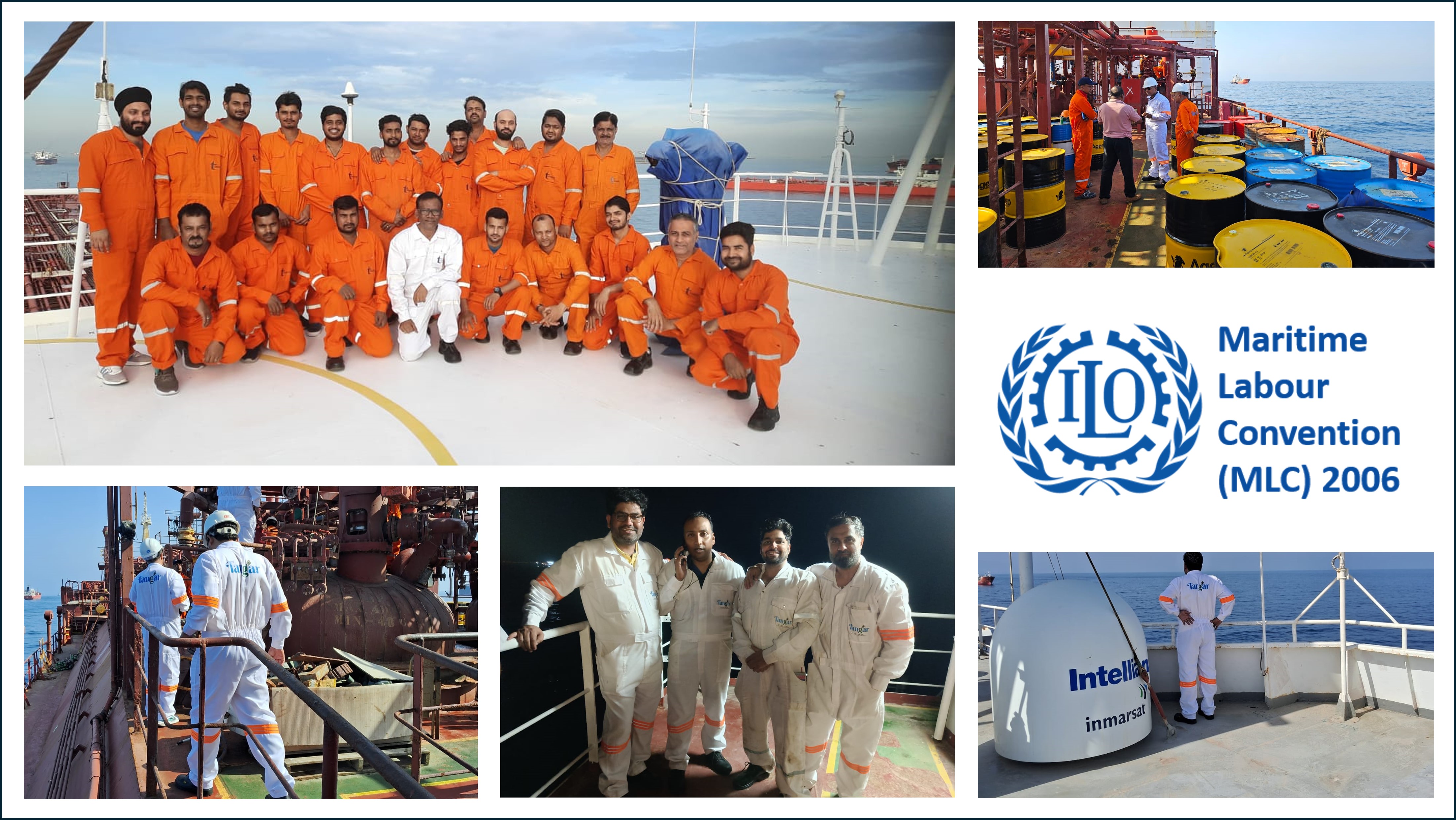
“Remember That My Crew Is Part of My Performance.” A vessel is made of steel, machinery and systems. But it operates through people. The competence, communication, welfare and readiness of the crew directly influence safety, reliability and operational performance.
Crew management should therefore never be viewed as simply filling positions.
It involves:
- The right people.
- The right competence.
- The right preparation.
- The right support.
A well-supported crew is better positioned to identify abnormalities early, follow procedures effectively and respond calmly when circumstances change. And sometimes, the most valuable information about a vessel does not come from a dashboard. It comes from the person standing beside the machinery. “Don't Let Compliance Become a Last-Minute Exercise.” Regulatory compliance is not something a vessel should prepare for only when an inspection is approaching. Strong maritime compliance management is continuous. Documentation, statutory requirements, safety procedures, class requirements, audits, inspections and operational standards need to remain part of everyday vessel management.
The real objective is bigger than passing an inspection. It is creating an operating environment where compliance becomes part of the vessel's culture rather than an emergency project before an external audit. A vessel that is consistently prepared is a vessel that is less likely to be caught unprepared. “Please Treat Small Problems Like They Matter.” This may be the most important thing a vessel could tell its manager.
- A small issue is rarely just a small issue.
- A minor leak can become equipment damage.
- A delayed spare can become extended downtime.
- A neglected maintenance item can become an operational disruption.
- A communication gap can become a safety event.
Of course, not every small issue becomes a major one.
But professional ship management is about recognising which small signals deserve attention before they grow. This is where experience matters.
“Help Me Spend Less Without Making Me Less Reliable.” Cost efficiency is important to every shipowner. But reducing costs is not the same as reducing expenditure wherever possible.
The smarter question is:
Where can we eliminate unnecessary cost without compromising safety, reliability or vessel performance? Efficient procurement, preventive maintenance, fuel management, voyage planning, inventory control and timely technical decisions can all contribute to a healthier operating cost structure. The cheapest decision today may not be the most economical decision over the vessel's lifecycle. Good ship management looks at the total cost of ownership, not just the immediate invoice. “Connect the Shore With the Sea.” One of the biggest strengths of professional ship management is the connection between shore-based expertise and onboard experience. The vessel sees the operational reality. The shore team sees the wider picture. When those two perspectives communicate effectively, decisions become faster, more informed and more practical.
Technical teams, marine operations, crewing, procurement, safety, compliance and commercial stakeholders cannot operate as isolated departments. They are parts of the same vessel-performance equation. The stronger the connection, the stronger the vessel. “Don't Wait for Me to Ask for Help.” A reliable ship manager should not only react when a vessel reports a problem. The stronger approach is to anticipate.
- What could affect the vessel during its next voyage?
- Which maintenance requirements are approaching?
- Are critical spares available?
- Is the crew properly prepared?
- Are compliance requirements being tracked?
- Could a recurring issue become a larger operational risk?
- What can be improved before the vessel needs to ask?
This is the difference between reactive ship management and proactive ship management.
So, If Your Vessel Could Talk…Perhaps it would not ask for more technology.
It would not ask for more reports, more meetings and much simpler:
“Pay attention.”
- Pay attention to the data.
- Pay attention to the crew.
- Pay attention to maintenance trends.
- Pay attention to compliance.
- Pay attention to costs.
- Pay attention to the small things before they become big things.
Because a well-managed vessel does not simply move from one port to another.
It operates with preparedness, reliability, efficiency and purpose and behind that performance is a ship-management team capable of listening before the vessel has to speak louder.
At Tangar Ship Management, We Believe Every Vessel Has a Story.
Our role is to understand that story through people, data, experience and continuous operational attention and turn those insights into better decisions for vessel owners and operators. Because the best ship management is not only about responding when something goes wrong. It is about knowing what the vessel may need before it has to ask