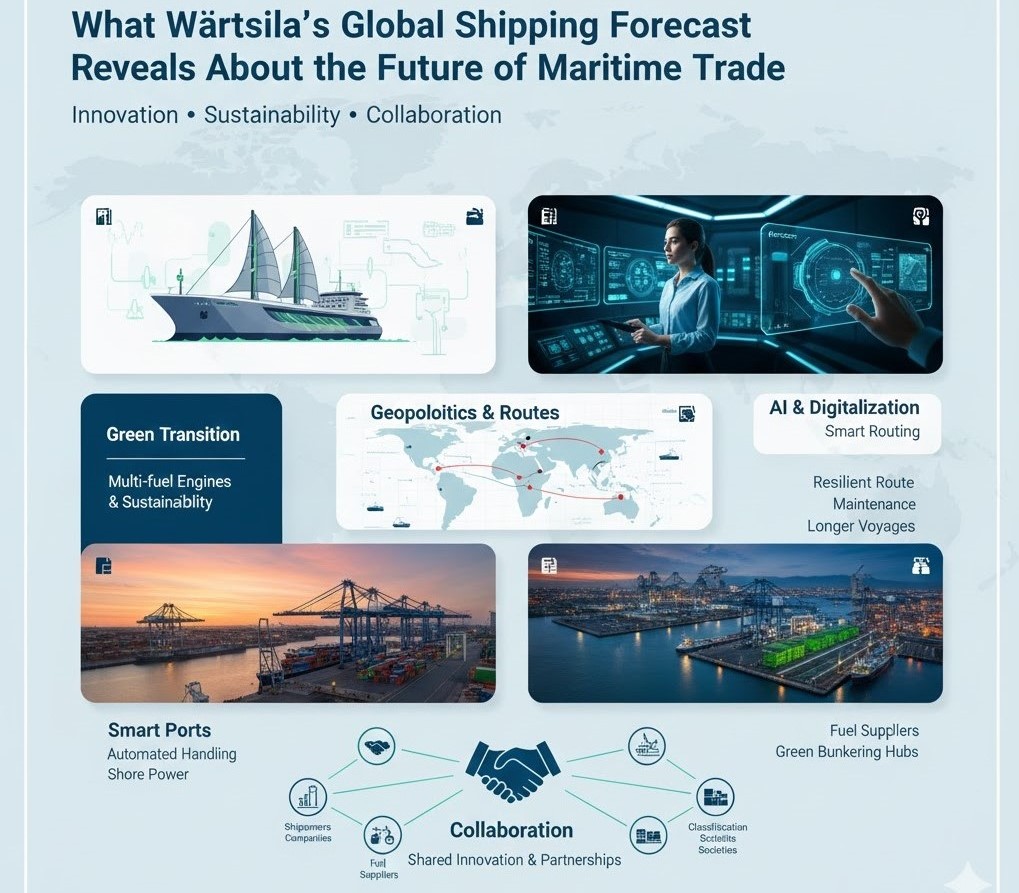
What Wartsila’s Global Shipping Forecast Reveals About the Future of Maritime Trade
Global shipping is entering one of the most transformative eras in its history. Wärtsilä’s latest Global Shipping Forecast highlights major shifts that will redefine how vessels move, how ports operate, how trade flows, and how maritime companies plan their strategies. From decarbonization urgency to digital revolution and geopolitical disruptions, the coming years will reshape the maritime landscape more dramatically than any decade before.
This forecast carries a powerful message: progress belongs to the prepared.
1. Green Transition Will Reshape Fleet Strategies Worldwide
Wartsila notes that decarbonization targets are accelerating faster than anticipated. Driven by IMO emission regulations, environmental policies, and customer demand for cleaner logistics, shipping is preparing to abandon the “business as usual” model.
Key shifts ahead
- Multi-fuel engines will become the new standard rather than single-fuel solutions.
- Carbon-intensity ratings (CII) and emissions reporting will influence charter rates and asset valuations.
- Scrapping and retrofitting cycles will intensify as non-compliant ships lose market appeal.
Some fleets are already transitioning to LNG, methanol, ammonia and biofuels, while hydrogen-powered and electric vessels are expected to scale in selected segments like coastal and short-sea shipping.
Insight: Traditional operational efficiency is no longer enough. The future vessel is one that proves its carbon transparency and sustainability credentials.
2. AI & Digitalization Will Define Operational Leadership
Digitalization is becoming the industry’s new competitive currency not a side project. Wartsila predicts a sharp rise in adoption of AI-powered tools for remote monitoring, autonomous navigation, smart routing, crew management and real-time compliance tracking.
Game-changing developments
- Digital twins for vessel performance simulation
- Predictive maintenance to eliminate unexpected breakdowns
- Voyage optimization saves fuel and cuts emissions
- Connected fleets with shore-based control centers
As the industry faces crew shortages, automation and hybrid work models at sea will become essential.
Advantage: Companies investing in intelligent digital tools will achieve lower operating costs, reduced downtime and higher safety.
3. Geopolitics Will Reshape Global Maritime Routes
The forecast highlights how geopolitical tensions — including conflicts affecting the Red Sea, Suez Canal disruptions, and shifting strategic alliances — have forced vessels to reroute thousands of additional miles around Africa.
Trade route outlook
- Longer voyages mean higher bunker costs and increased transit time.
- Shipping lines must build flexible and resilient network strategies.
- Insurance premiums and risk-mitigation planning will influence trade economics.
Lesson: Global trade routes are no longer stable — agility is becoming a core business asset.
4. Ports Will Transform into Smart Logistics Ecosystems
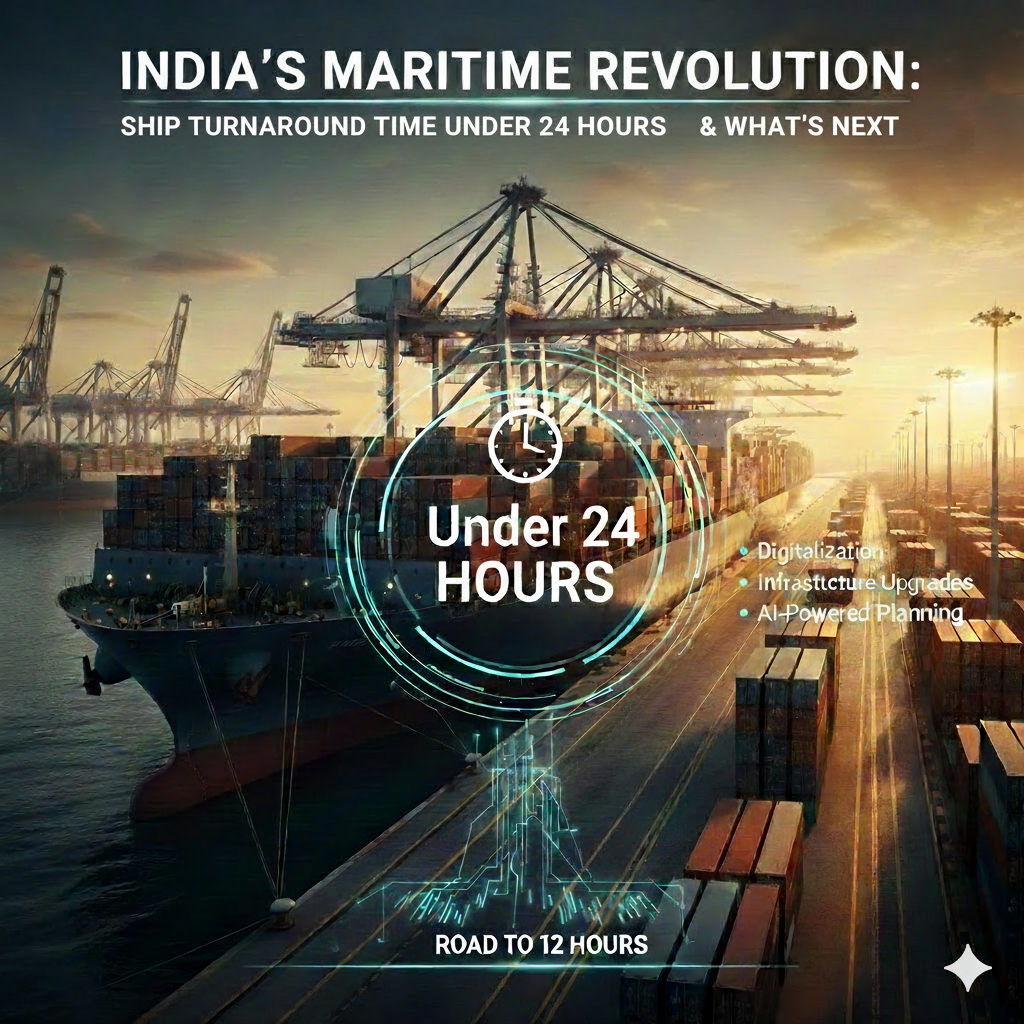
Ports are rapidly evolving from infrastructure hubs into digitally intelligent, energy-efficient logistics ecosystems. Investments are expanding in renewable energy, AI-port operations, automation, and green bunkering.
Future port priorities
- Digital smart-port platforms enhancing efficiency and transparency
- Electrification, shore-power connections, and battery integration
- Automated container handling and unmanned transport systems
- Green bunkering hubs supporting methanol, ammonia and LNG
Outcome: Competitive advantage will shift to nations that modernize port infrastructure to attract global trade.
5. Collaboration Will Become the Industry’s Main Growth Engine
Wartsila projects a future where cooperation across the maritime supply chain becomes essential. No single company can solve sustainability, fuel transition and digital transformation alone.
Collaborative success factors
- Shared innovation ecosystems between shipowners, tech companies, fuel suppliers, classification societies & governments
- Knowledge-sharing reducing R&D costs
- Joint ventures accelerating fuel and propulsion technology deployment
Reality: The future maritime economy will be built on partnerships, not competition alone.
Industry Outlook: A Dec??ade of Transformation
The next 5–10 years will define the maritime industry for generations. Companies that embrace innovation, sustainability and collaboration will lead. Those that resist change may disappear.
What industry leaders must focus on now
Priority: Green fuel adoption & retrofit programs, Digital optimization & AI systems, Flexible route & risk strategies Smart portconnectivity, Global collaboration
Competitive Impact : Protect fleet value & compliance, Lower OPEX & safer navigation, Business continuity, Smart port connectivity
Faster, profitable trade, Faster innovation, lower cost
Final Reflection: Wartsila’s forecast is not just a vision it is a reality check. The maritime world is moving toward a future where efficiency is digital, success is sustainable, routes are unpredictable, and leadership requires collaboration. The industry has two choices: adapt or fall behind.
The winners will be the companies that act now.